
The Most Obscure Job I Never Knew I Wanted
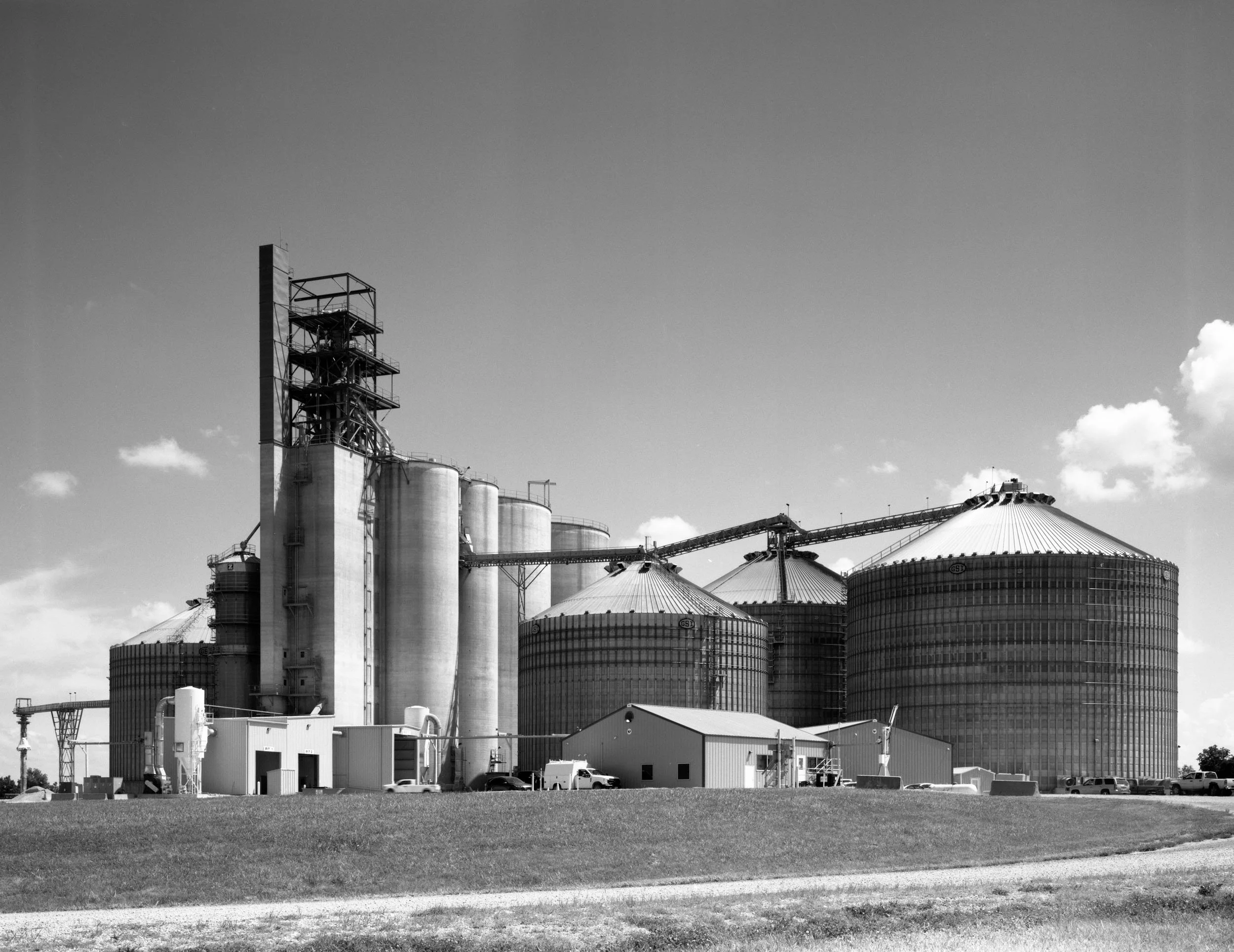
The Ray-Carroll grain elevator in Corder, Missouri - shot on Ilford FP4 4×5 film
Someone commented on a recent Instagram post — a set of large-format black-and-whites I shot in Missouri—grain elevators and feed mills — and suggested I look into donating work to the Library of Congress. Specifically, to a program most people have never heard of: HABS/HAER/HALS.
I hadn't heard of it either. So I went looking.
HABS — the Historic American Buildings Survey — has been running since 1933. Its companion programs, HAER (engineering) and HALS (landscapes), cover the rest of the built and natural environment: bridges, mills, ports, rail infrastructure, battlefields, cemeteries. Together they're the federal government's archive of American places worth remembering, whether or not those places survive. A lot of what's in the collection doesn't exist anymore. The photographs are what's left.
Here's the part that most surprised me: the technical requirement for inclusion is large-format black-and-white film — 4x5 minimum, on silver-halide stock expected to last 500+ years, shot with a view camera for perspective control.
I’m already doing all of that! It’s funny to me that something so esoteric and archaic as large format black and white still has an official place in the real world, outside of fine art. I shoot 4x5 on a Chamonix 45F-2—picture a big, wooden camera with bellows. I’d jokingly rationalized it to my wife: “I’m a grandpa now. What more old man hobby is there than large format photography?” I can dress without regard for fashion, wear a Tilley hat, and hang out around feed mills with a very old-looking camera. Digital capture, for what it's worth, still doesn't meet the standard — which means the thing that makes large-format work slower and less convenient than a digital body is exactly the thing that makes it eligible here.
And the subject matter lines up too closely to be a coincidence. HAER exists specifically to document engineering and industrial sites — the silos, ports, bridges, and rail infrastructure I've been photographing on my own time for fun, not as client work, just because I find them beautiful and cool. That's precisely the category of place this program was built to preserve on record.
I want to be straightforward about where I actually am with this: I haven't submitted anything, and I'm not pretending to be a HABS veteran. What I have is the right camera, the right film, years of practice keeping verticals true and light honest on architectural and industrial subjects, and a body of personal work that's already, unintentionally, been building toward exactly this. I'm at the beginning of figuring out how a donation or a documentation project actually comes together — who to talk to, what a submission looks like, what it means to sign over a negative to the public domain.
I'm not doing this because I expect it to be a major business line. It won't replace digital architecture and interiors photography, and I'm not chasing it for that reason. I'm doing it because the work itself — slow, deliberate, large-format documentation of things most people drive past without seeing — is the kind of photography I'd do whether anyone was paying attention or not. Finding out there's a 90-year-old federal analog database built around exactly that instinct, using exactly the gear I already own, felt worth looking into. If there are really jobs like this… sign me up.
If you're a preservation consultant, or an agency handling a Section 106 or CEQA mitigation requirement, I'd genuinely like to talk. And if you just want to see more agricultural infrastructure, the Missouri set is on Instagram (and there’s more where those came from).