
Photographing Commercial Real Estate: Offices, Industrial, and Warehouse Spaces
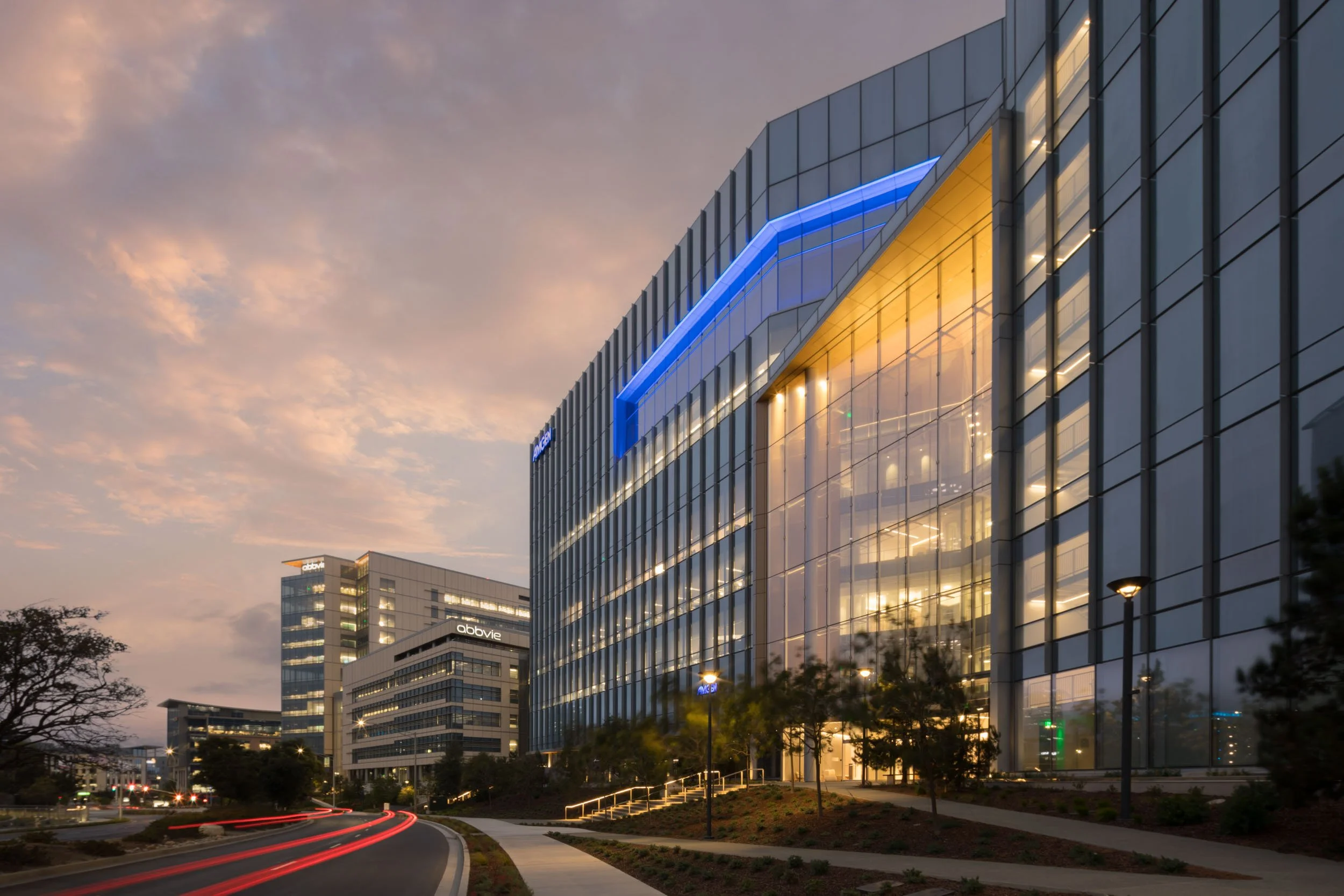
A hero twilight exterior of a biomedical research campus
While much of my work focuses on residential architecture, I also regularly photograph commercial and industrial properties for brokers, developers, and operators.
Commercial Spaces Aren’t Photographed Like Homes
When I’m on location with architects, designers, or luxury real estate brokers photographing remarkable homes, we’re often aiming to create an emotional connection between an audience and the space. The photography leans into atmosphere, light, and narrative. We want people to imagine themselves there.
Commercial real estate shoots are different. The goals are more objective and pragmatic. The images need to clearly communicate scale, infrastructure, access, flexibility, and performance. They’re less about lifestyle and more about utility. The creative challenge shifts from evoking a feeling to conveying clarity.
What Commercial Clients Actually Need
To Prepare an Offering Memorandum (OM)
An offering memorandum is the marketing package commercial brokers use to present a property to potential buyers or investors.
In that context, the photography supports a financial narrative. It helps establish credibility and reinforces the value of the asset itself.
Typically, it includes:
An exterior hero image
Infrastructure access (road, rail, ports)
Interior volume—square footage and ceiling clearance (for warehouses)
Loading dock configurations
Office build-outs and technical amenities
The emphasis is on showing the property as a complete, investable asset.
For Leasing & Ongoing Marketing
Leasing photography overlaps in many ways, but the audience shifts. Instead of appealing to investors evaluating a balance sheet, the images are speaking to prospective tenants imagining daily operations.
Here, clarity and usability take center stage:
Clear depiction of layout and circulation
Ceiling heights and operational infrastructure
Lighting quality
Flexibility of space
Work-ready office areas
The goal is less about long-term asset value and more about operational fit.
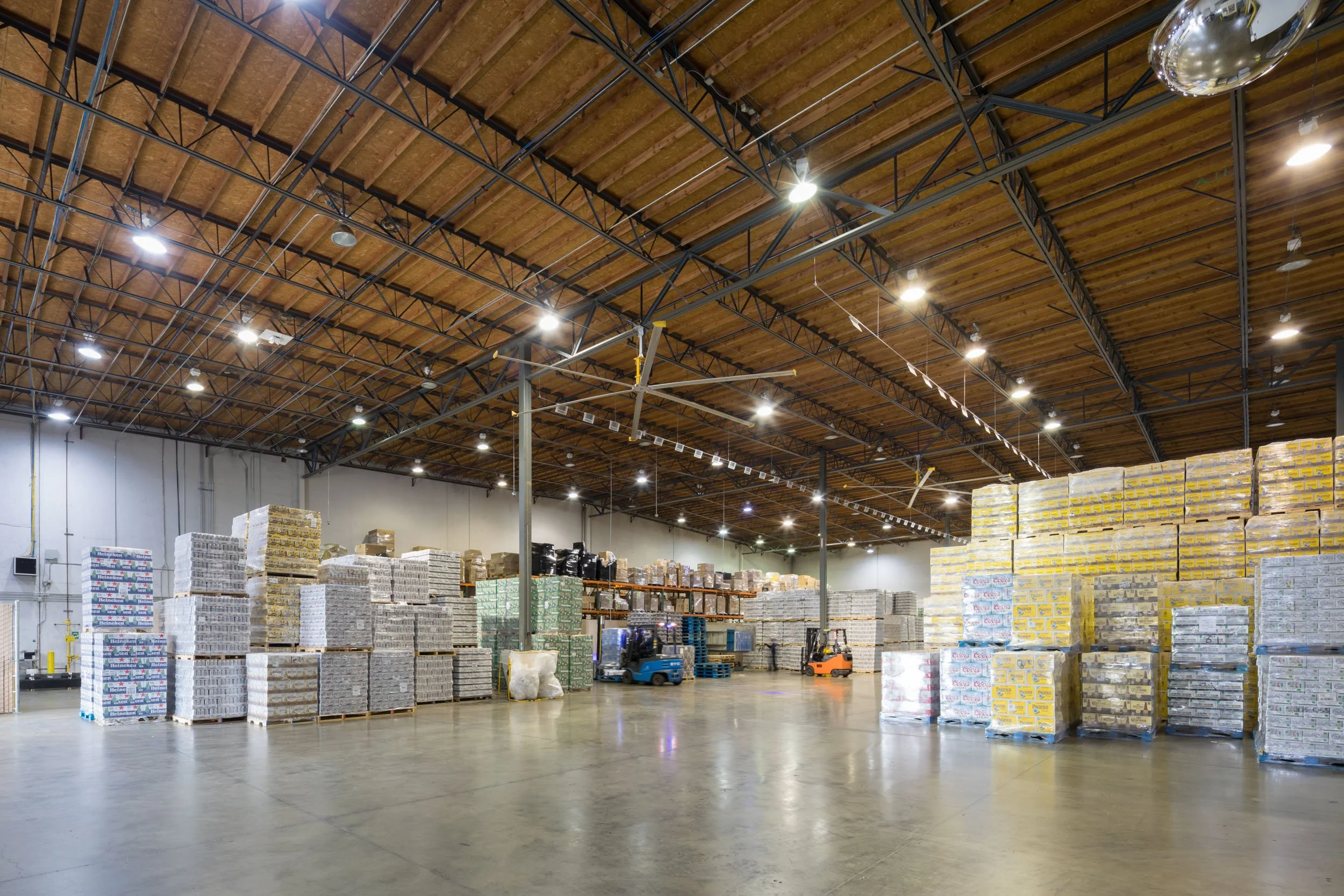
a warehouse shot for the portfolio of an industrial space leasing firm
For Corporate Use
Commercial photography often extends well beyond brokerage materials. Once created, the images can support the company itself.
They’re frequently used for:
Website updates and brand positioning
Investor presentations and annual reports
Recruiting materials
Internal board reviews when stakeholders can’t easily visit the site
Make it stand out
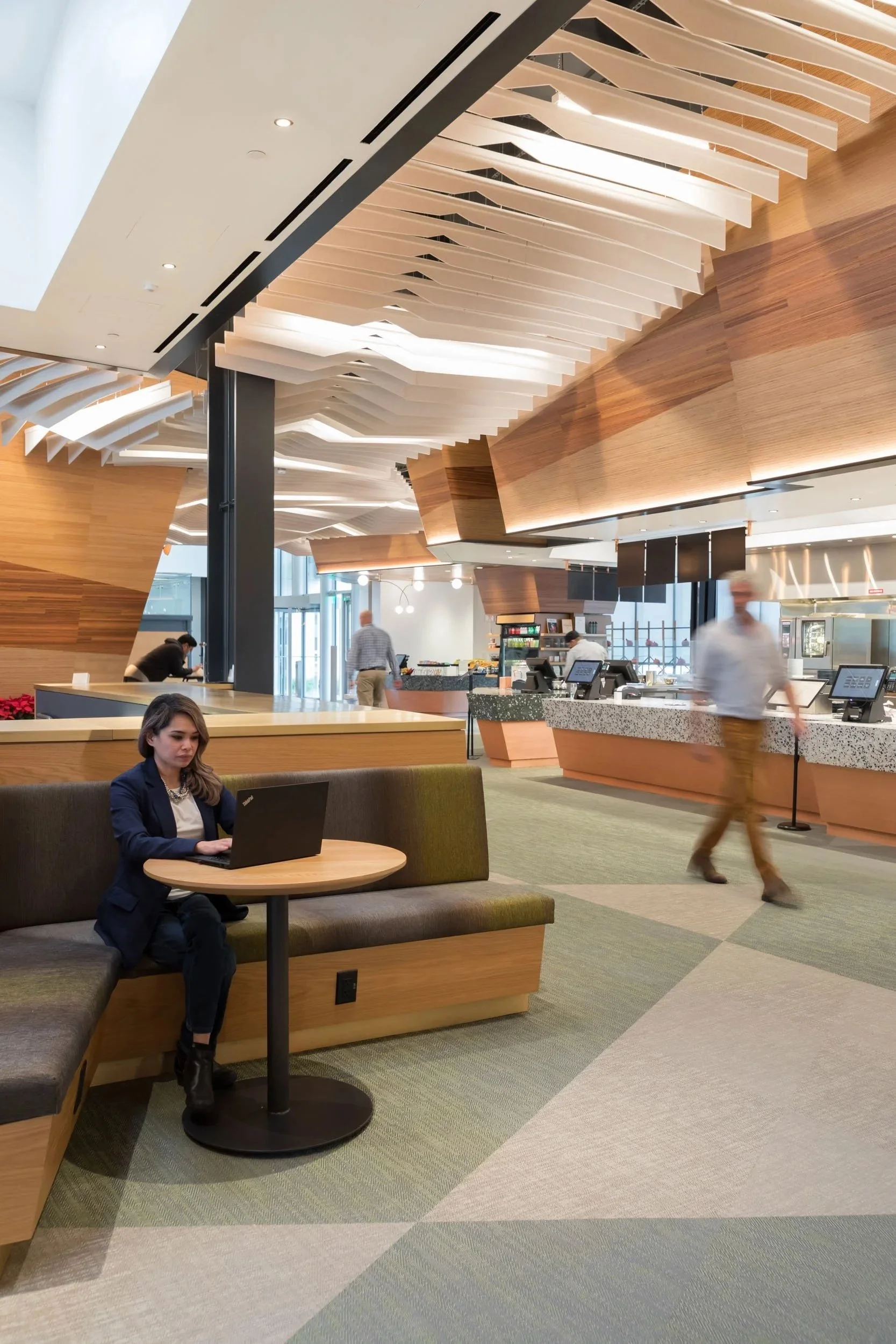
This image of an office campus restaurant was populated for the shoot by members of the client’s staff
How the Photography Supports Those Needs
Each commercial project has specific priorities, so I arrive prepared for the demands of the property. Often it’s the same core equipment I use for architectural work, but applied differently.
Lighting is rarely added in commercial interiors, but I’m prepared when conditions require it. In new builds, power isn’t always fully active, or fixtures aren’t completely installed, and supplemental lighting can help present the space accurately.
More often, the challenge is conveying scale without distortion — showing the true height of warehouse racking, the clearance of a loading bay, or the volume of a multi-story lobby. Perspective-control lenses and view camera movements are built for this purpose.
Mixed lighting and high contrast are also common. Daylight at loading docks can be dramatically brighter than the warehouse interior. Office spaces often combine cool exterior light with warmer interior fixtures. These variables are anticipated on site and balanced carefully in post-production to maintain realism and clarity.
Need for polish varies widely depending on use. Sometimes I’m tasked to simply document a remodel, say, and I’m only given access to the space for an hour or so before opening, while the staff restocks shelves.
Other times, the photos will have much greater marketing reach, used in glossy brochures, ads, and need to be shot and edited to look the absolute best they can. Areas may be empty, or populated. Sometimes the camera will be set in one place for a while, and I’ll capture different people moving through he scene, and then later will cherry-pick from the best locations, poses, outfits, whatever, to build a final composite of real-world passers-by into a final photography. Or, my client will themselves step in to add some life and movement, volunteering other members of their team to stand at a desk, sit at a table with a laptop, or walk up a flight of stairs.
And of course, if necessary, it’s also possible to populate an empty seen with “virtual” people, just like they’d be placed in a rendering by an architect.
Aerial Photography
Aerial imagery is often indispensable in commercial real estate. It provides context that ground-level photography cannot — scale, adjacency, access to freeways, airports, seaports, and rail infrastructure.
Drone photography is common and cost-effective, and is often the starting point. However, drone access isn’t always possible, particularly in light-industrial developments located near controlled airspace.
In those situations, helicopters or small fixed-wing aircraft can offer meaningful advantages: access to controlled airspace, greater range, higher altitude perspectives, and the ability to use longer lenses. Longer focal lengths can visually compress distance, clearly connecting a property to surrounding infrastructure.
When multiple properties need to be photographed, aircraft can also provide surprising efficiency — covering a broad area quickly while maintaining high image quality using professional camera systems.
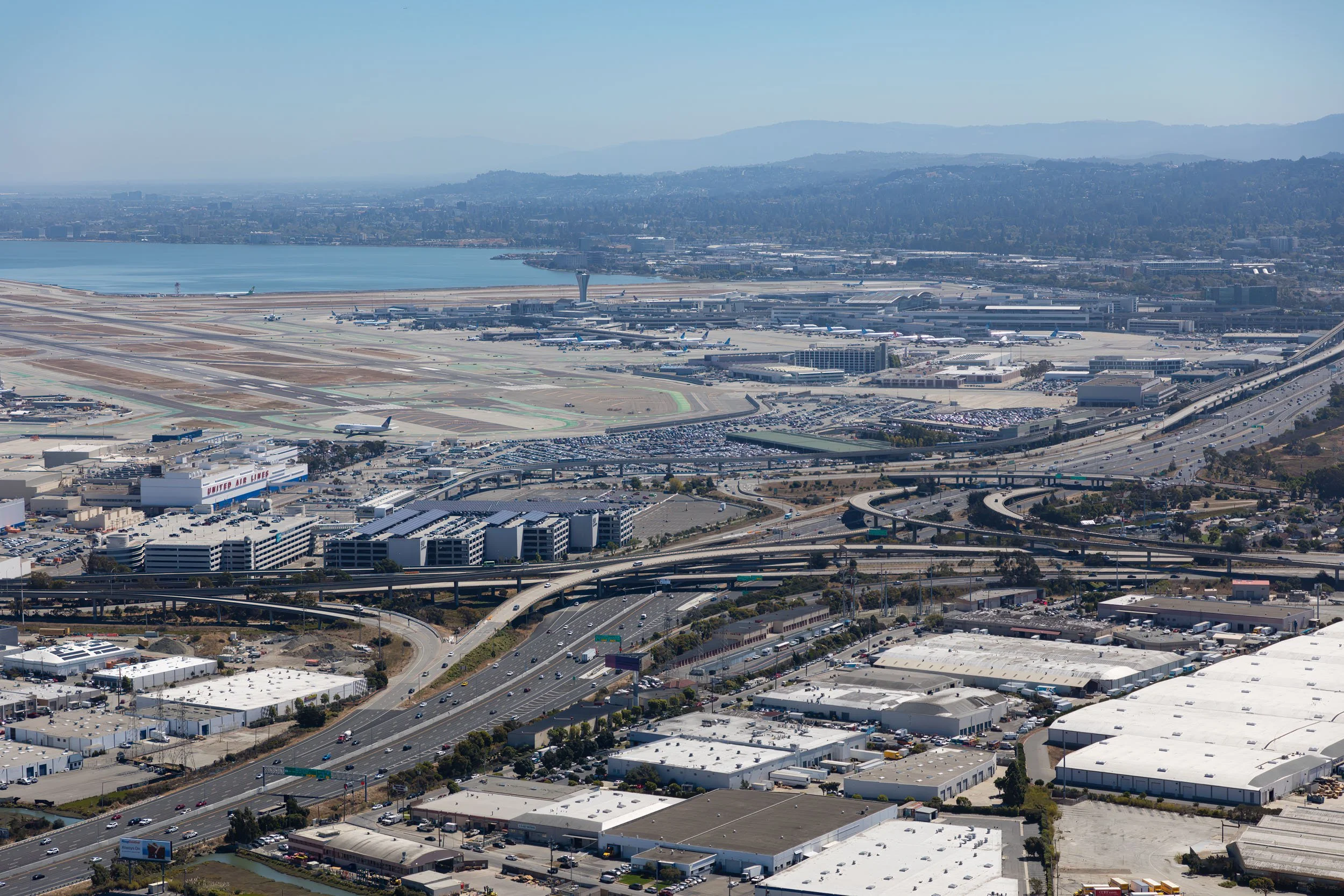
an aerial view of a warehouse park, shot from a small plane with a telephoto lens, highlights proximity to the freeway and the airport
Where Architecture and Industry Meet
Commercial real estate and industrial photography are a natural extension of architectural work. The subject shifts—from homes to offices, warehouses, and industrial campuses—but the underlying goal remains the same: to describe the built environment clearly and accurately.
The approach adjusts to meet the priorities of brokers, developers, and operators, but the standards don’t change. Precision, clarity, and thoughtful composition matter just as much here as they do in residential or design-driven projects.
If you’re preparing an offering memorandum, marketing available space, or updating corporate materials, I’m always happy to talk through what would be most useful for your specific property.